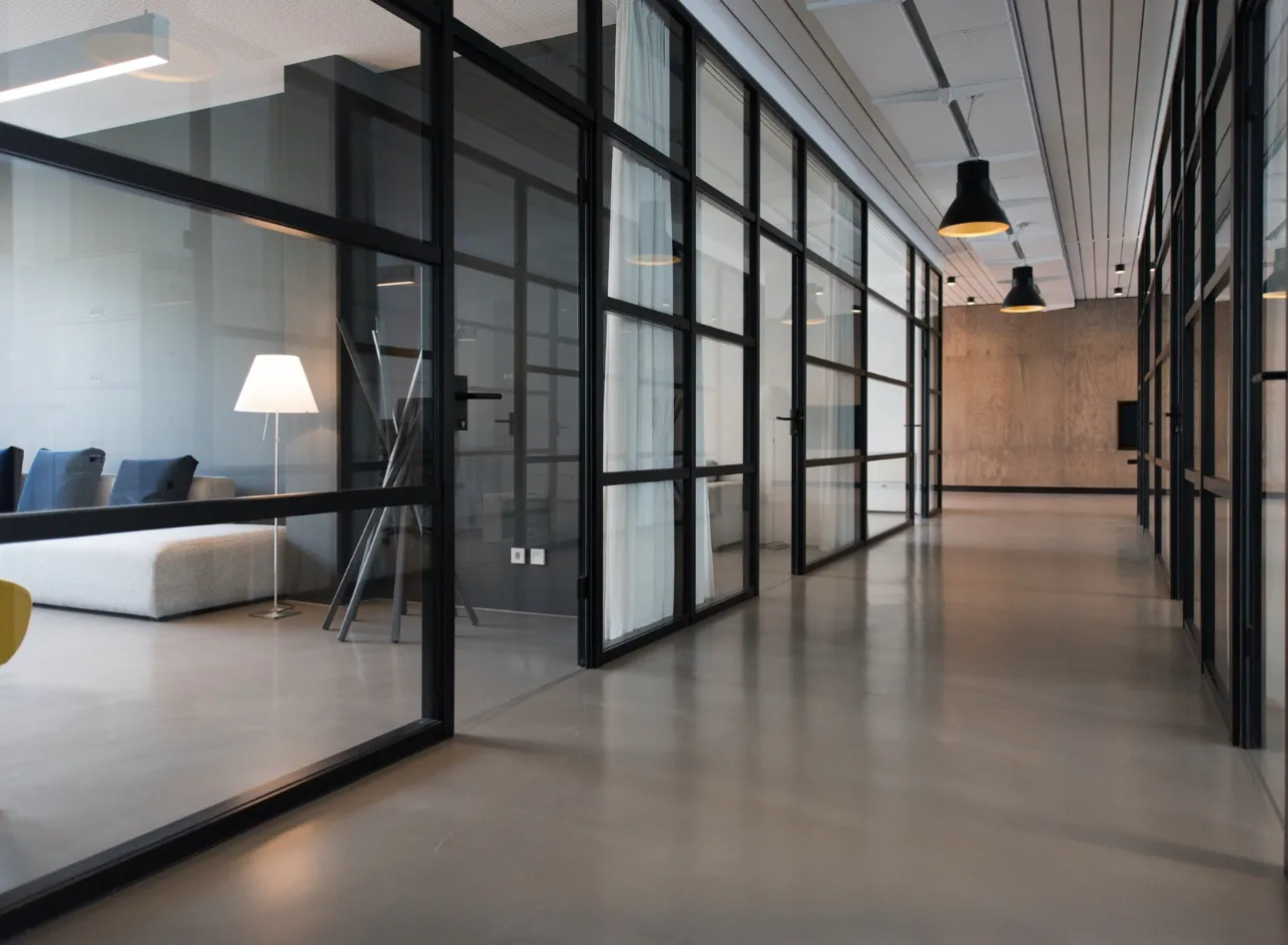
Post-pandemic, many businesses in New Zealand find themselves with more office space than they actively use. Hybrid working has reduced daily occupancy, team sizes have changed, and lease terms negotiated in 2018 or 2019 no longer reflect operational reality.
If your business has surplus office space and a lease that still has time to run, you have options to generate income from it rather than carrying the cost as a dead weight. But before you move a desk or invite someone in, there is a legal framework you need to understand.
Two ways to monetise surplus office space
There are two legal structures commonly used for sharing commercial office space in New Zealand.
Sublease
A sublease grants the sublessee exclusive possession of a defined area of your premises. The sublessee can control who enters that space, exclude others from it (including you), and use it as their own workplace. A sublease creates a legal interest in the property - it is a mini-lease within your lease.
Licence to occupy
A licence grants the right to use part of the premises without exclusive possession. The licensor (you) retains overall control of the space. Licensees often share common areas - kitchens, meeting rooms, reception - and do not have the same legal interest in the property that a sublessee does.
Sublease vs licence - which is right for your situation?
| Factor | Sublease | Licence to Occupy |
|---|---|---|
| Exclusive possession? | Yes - sublessee controls the area | No - licensor retains control |
| Legal interest? | Yes - property interest created | No - personal right only |
| Landlord consent required? | Yes - almost always | Usually not required (check your lease) |
| Formal agreement required? | Yes - Deed of Sublease | Yes - Licence Agreement (simpler) |
| GST applies? | Yes (if GST-registered) | Yes (if GST-registered) |
| Best suited to | Defined, walled-off areas; 6+ months; significant income | Desks, cubes, hot-desking; short-term; lower income |
| Income predictability | Higher - fixed term | Lower - usually month-to-month |
| Exit flexibility | Lower - bound by sublease term | Higher - can usually terminate on short notice |
| Setup time and cost | Higher - requires legal work and landlord approval | Lower - simpler documentation |
The legal framework: what your lease says matters
Before marketing your surplus space to anyone, you need to read your lease carefully. Two provisions are particularly relevant.
The permitted use clause
Your lease will specify the purpose for which the premises may be used. A typical commercial lease might say something like: “Use as offices for the conduct of the tenant’s business.” If you bring in a sublessee or licensee whose business is different from yours, you may need the landlord’s consent for an extended or varied permitted use.
For example: if your permitted use is “professional services offices” and the sublessee wants to use the space as a recording studio or retail popup, that is almost certainly outside the permitted use and will require explicit landlord approval.
The subletting and assignment clause
Most commercial leases based on the ADLS Sixth Edition include a clause that permits subletting with the landlord’s consent, which cannot be unreasonably withheld. However:
- Some leases prohibit subletting entirely
- Some leases only permit subletting of the whole premises, not a part
- Some leases require the sublessee to have a minimum level of covenant strength (financial standing)
- Some institutional landlord forms are more restrictive than the ADLS standard
Read your specific lease provisions - do not assume you have the right to sublease without checking.
Letting someone into your office space without checking your lease is one of the most common and costly mistakes commercial tenants make. A breach of the subletting clause can expose you to a breach notice - and ultimately, cancellation of your lease.
When a sublease is the right choice
Subleasing a portion of your premises works best when:
- You have a defined, physically separate area (a floor, a suite, a walled-off section) with its own or easily separated access
- There is at least 6 months of remaining term on your head lease (ideally 12+ months)
- You want stable, predictable income rather than flexible month-to-month arrangements
- The area is large enough to be worth the cost and time of the formal process
Getting landlord consent for a sublease
You need written consent from the landlord before proceeding. To obtain consent you will typically need to provide:
- A business profile of the proposed sublessee
- Financial references or evidence of covenant strength
- Details of the proposed permitted use
- The proposed sublease term and rent
The landlord cannot unreasonably withhold consent. If they do, that refusal can be challenged - your lawyer can advise on the process. However, a reasonable landlord will usually grant consent for a sublessee of sound financial standing whose use is compatible with the building.
The Deed of Sublease
Once consent is obtained, the sublease must be documented in a Deed of Sublease executed by you, the sublessee, and the landlord. Key provisions include the defined area (with a plan), the term (which must expire before your head lease), rent, outgoings, and make-good obligations at the end.
Building services and fit-out considerations
If you are physically partitioning the space to create a separate area for the sublessee, you may need to reconfigure building services:
- Electrical circuits and sub-metering (so sublessee electricity use can be charged separately)
- Air conditioning zones
- Fire detection and sprinkler systems (to comply with the Building Act and fire regulations)
- Internet and data cabling
These works may require a building consent and the involvement of a specialist fit-out contractor. Consult a building services engineer before committing to the works - the cost can be more than expected.
When a licence is the right choice
A licence works better when:
- You have pockets of unused desks, cubes, or offices rather than a separate demised area
- You want month-to-month flexibility to reclaim the space if your team grows
- The proposed occupant shares the same general work environment as your business
- Security requirements are not a barrier to shared access
Setting up a licence arrangement
A Licence Agreement (or Desk Licence) should cover:
- The licensed area or desks (described specifically)
- The monthly licence fee (plus GST)
- Shared services included (internet, printing, meeting room access, kitchen)
- House rules for the shared space (guest policy, noise, use of common areas)
- Notice periods for termination (typically 20–30 working days)
- Exclusion of exclusive possession and any property interest
Licence agreements are simpler than a Deed of Sublease but should still be in writing. A verbal or handshake arrangement creates uncertainty about terms and makes it harder to remove a licensee who is not performing.
Pricing your spare desks
Dedicated desks in Auckland office buildings typically rent for $500–$800 per month depending on quality, fit-out standard, and location. Check nearby co-working spaces (Regus, Generator, Bizdojo) for local benchmarks - pricing slightly below the nearest co-working option is a good starting point.
You can list available desks and offices on platforms like sharedspace.co.nz or instantoffices.com, or simply approach businesses you know whose work is compatible with yours.
GST: what you need to know
Both sublease rent and licence fees are subject to GST at 15% if you are GST-registered. This means:
- Your invoices to the sublessee or licensee must include GST
- You must return that GST to Inland Revenue in your GST period
- If the other party is also GST-registered, they can claim the GST back as an input credit
If you are not currently GST-registered and your sublease or licence income pushes your total taxable supplies over $60,000 in a 12-month period, you are required to register for GST.
Practical tips for maximising your surplus space
Before opening your doors to another occupant
0/0 completeThis article provides general information about subleasing and licensing commercial office space under New Zealand law as at October 2022. It is not legal advice and is not a substitute for advice on your specific situation.
Sources
- Property Law Act 2007 (NZ)Governs sublease and licence arrangements for commercial property.
- Goods and Services Tax Act 1985 (NZ)GST treatment of sublease and licence income.
Was this article useful?
Thanks for the feedback. It helps us improve.